

Greased Line Carp
Utilizing salmon and steelhead tactics for golden glory

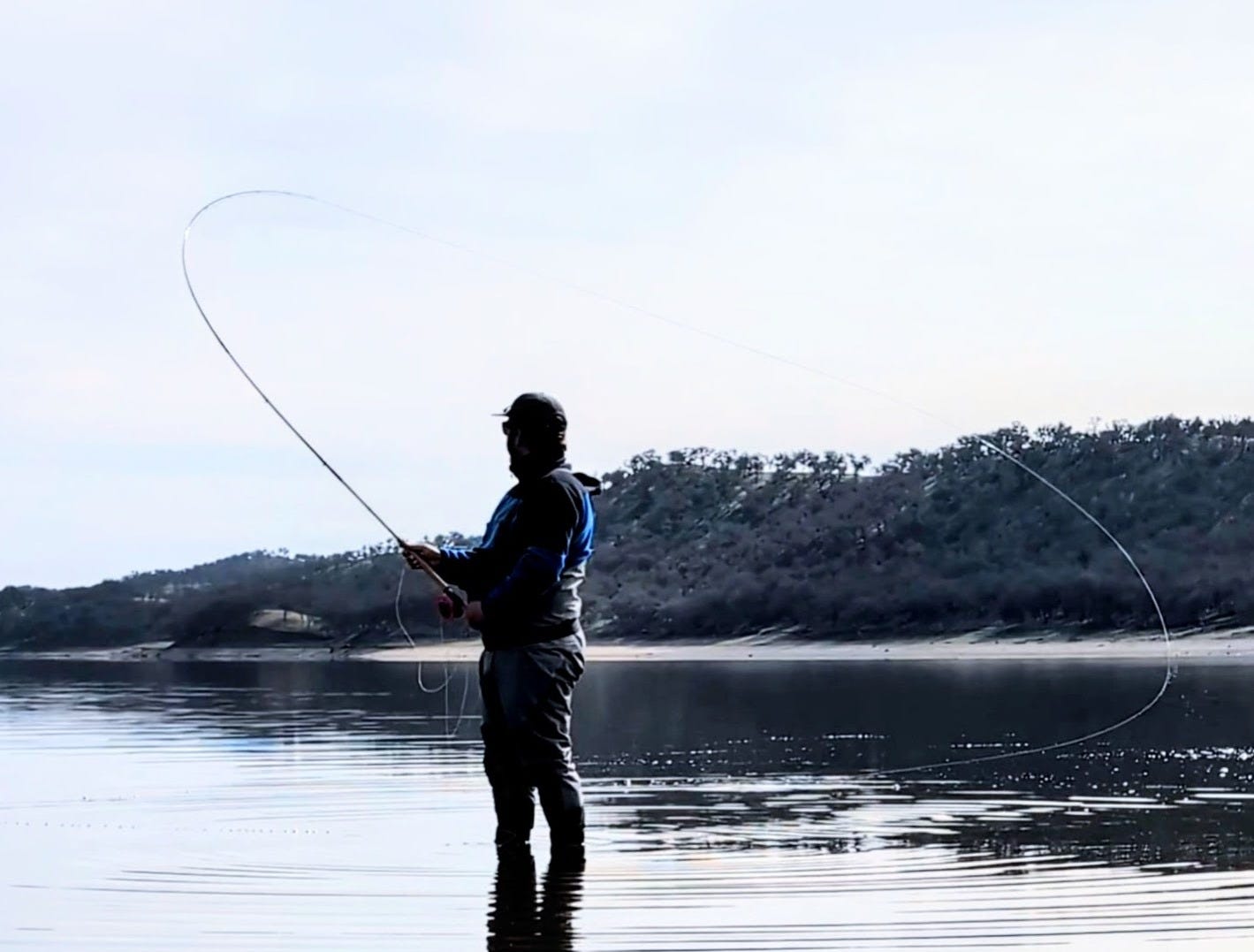
Cruising right under the surface, chowing down on water fleas and midge emergers - these are some of the toughest situations you’ll face when trying to catch carp on a fly.
The solution? Look towards spey fishing.
I love spey fishing, spey casting, double handed rods, scandi lines and sexy casts - it’s all appealing. And I do it a lot, whether salmon or sea trout fishing back home in Iceland, or steelhead fishing in California. So it feels natural to apply these techniques to my local carp fisheries.
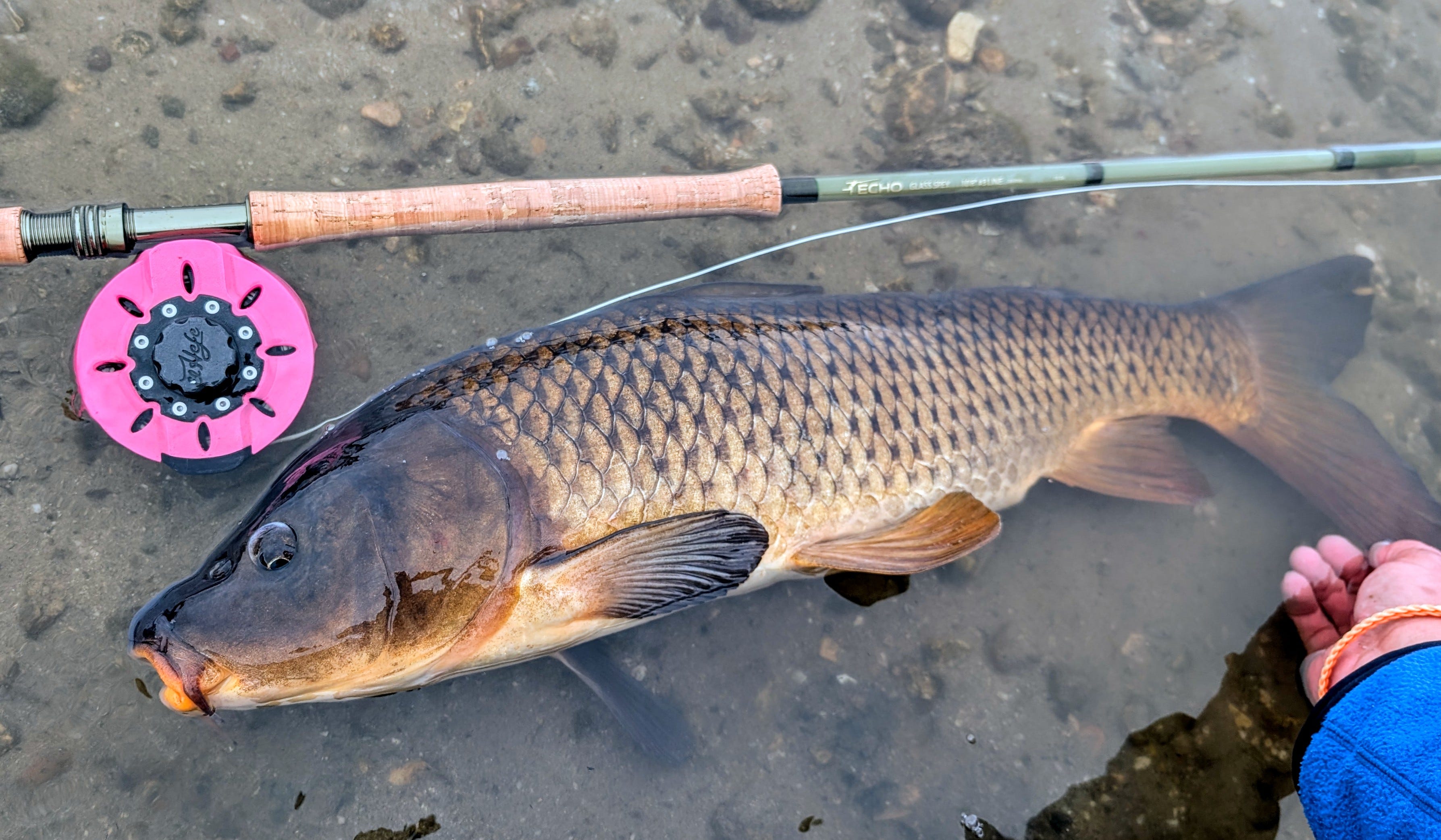
Winter time on the Central Coast means freezing mornings and warm afternoons. It’s these warm afternoons that bring on massive midge hatches, and bring the water fleas up the water column into the surface film. The water fleas in particular present a conundrum - they’re tiny, they’re there in the millions, and the carp are eating them about a fraction of an inch to a foot under the surface film. Most of the time you’ll either see the carp just under the surface or barely break the surface film with their heads as they plow through these groups of fleas.
The first conundrum is figuring out how to imitate these water fleas, which are almost microscopic, and impossible to imitate as a solo food object. The carp are also not eating them one by one, they’re plowing through big groups of them. Which could be mistaken as them being easy to fool as long as you get a fly in front of them, which is not true. Carp can hit reverse faster than any species of fish I’ve seen, and if they don’t like what they’re about to put in their mouth, they’ll stop, back up, and move on. The best way I’ve found to imitate these clusters is almost identical to how you’d imitate a cluster of midges - a griffith gnat. But to imitate them below the water surface, we drown it with a fluorocarbon tippet. Which gets me to the greased line method.
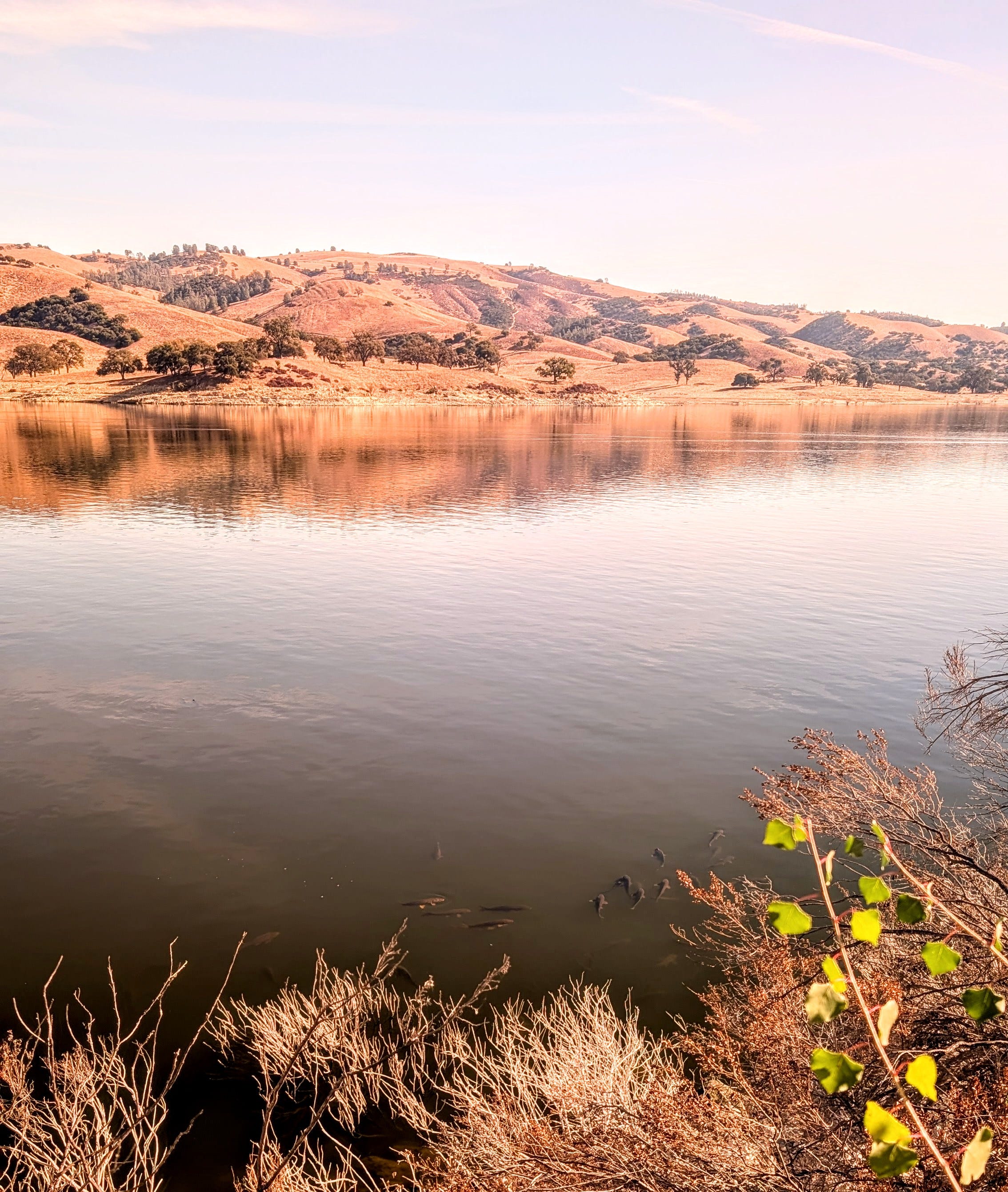
Greased line techniques are common for summer steelhead, Atlantic salmon, and other species chased with swung flies on rivers. The basics are that you grease, or put floatant on the leader itself to keep the fly high in the water column. This adapts pretty perfectly to the situation at hand with carp feeding just under the surface.
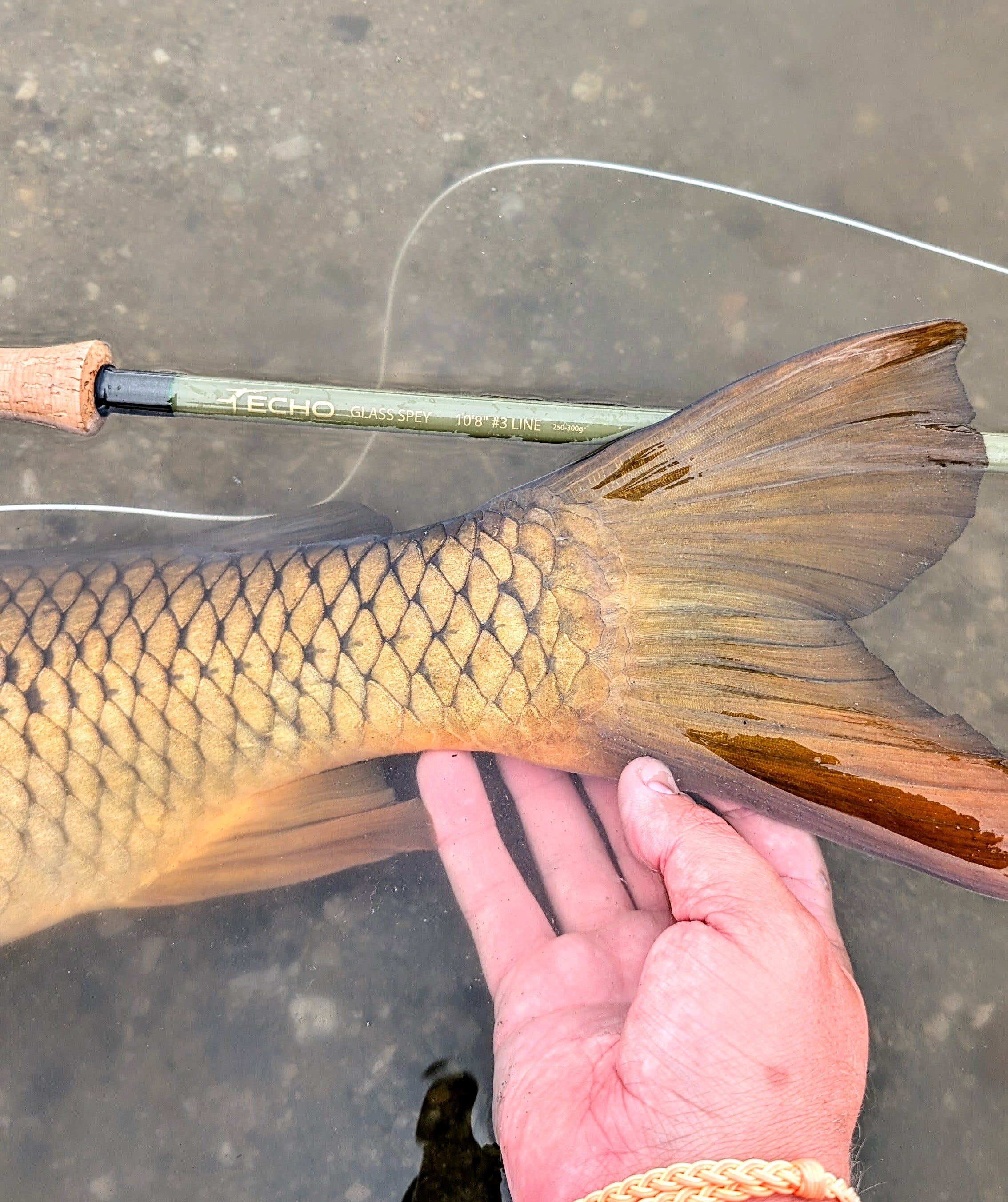
I set up with a 3wt trout spey, ideally a glass rod, because it’s always more fun with the glass. A light 240 grain scandi line, and a 15ft or longer leader is ideal. I like to build the leader mostly out of mono, with the tippet section fluorocarbon to drown the cluster. Grease the last part of the mono, and depending on how deep the fish are feeding, I often grease the first part of the fluorocarbon, just to keep the fly right under the surface.
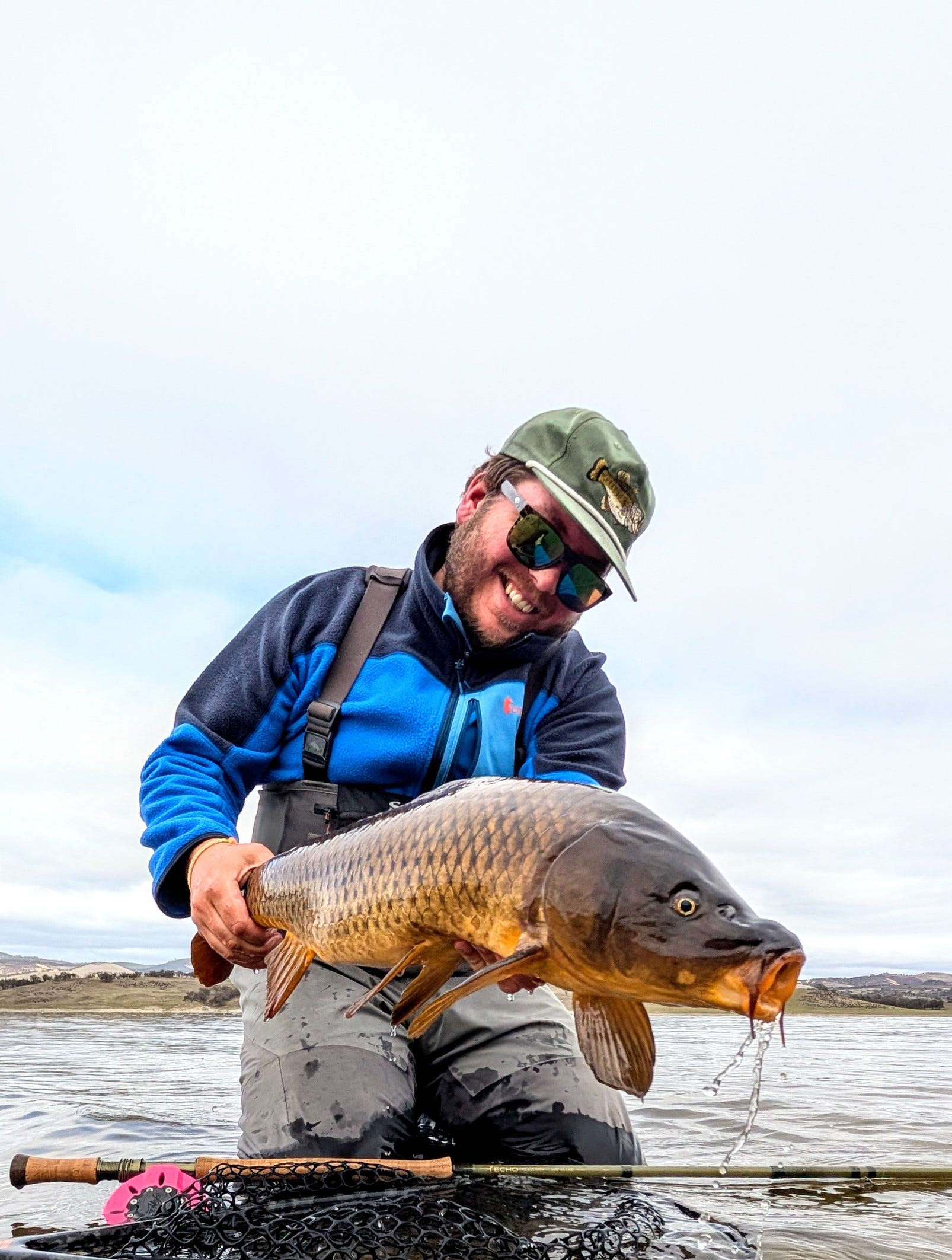
Most of the time you’ll see the carp moving, which makes it easy to cast in front of them and let the fly drop slowly. Ideally you’ll see the fish eat the fly, I don’t like overly relying on seeing the line move to detect a take as that will sometimes result in a foul hooked fish, which I personally like to avoid. If you do accidentally bump into one somewhere other than the mouth, you’ll usually know immediately with the lack of head shakes - but with barbless flies it’s easy to drop those fish by giving slack, but usually if it is on the main body the scales will just pop off and make it easy on you. Try to be in a position where you can see the fish eat it, and occasionally you’ll get an aggressive one that slams the fly and sets the hook for you. Think of the greased line as more of a way to just hang the fly under the surface film rather than an indicator.
Another plus with using spey tactics means you can pick up the fly and present it again without having to strip the fly through the group of fish, which can spook a lot of carp. Simply pick up the fly with an aerialized snake roll, and present the fly again. This isn’t the place for skagit heads and heavy lines, use a lighter presentation line and you’ll get more accurate presentations and less fish spooked.
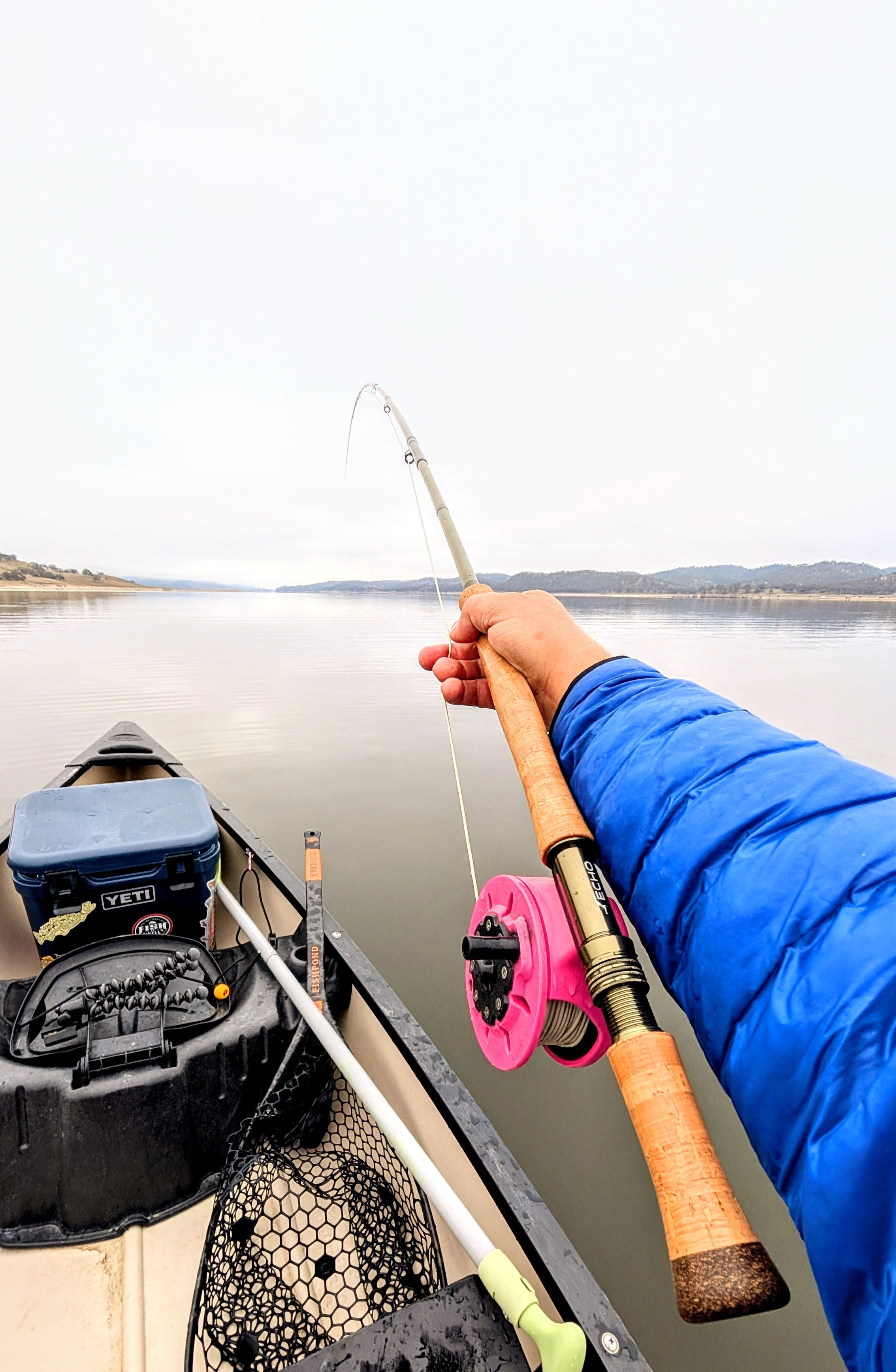
You also don’t need to use a spey rod or spey lines for this, use your standard fly rod and floating line, you can pick those up with a snake roll easily as well and it won’t affect your success rate much at all. I just like the light spey rods and they’re fun to fish. The longer rod during the surface feeding season also helps to manage presentations at longer distances. But I often use this technique with my single handers as well.
The fly fishing world for carp can often feel like it is stuck on only a few select styles of fishing, but the beauty of these golden fish is how diverse they are and finding different ways of targeting them throughout the year is one of my favorite things about them. Whether you end up greasing your leader for carp is up to you and your fishery, but hopefully it gets you thinking outside the standard “drag and drop” technique for carp, and find different ways of targeting these awesome fish in ways that fit your fishery.
Clever adaptation bringing the greased line method from Atlantic salmon to carp. I like how it solves the problem of presenting to fish feeding just under the surface without stripping through the school. The Griffith's Gnat drowning trick with fluorocarbon makes alot of sense for imitating clustered water fleas. Never thought about using spey casting to avoid spoking fish, but that pick-up and re-present strategy is genuinely smart.